New vehicle drivers understand lane changes and parallel auto parking due to the fact that examinations demand it. What the exam rarely determines is just how calmly and competently somebody reacts when the car stops smoking on the shoulder, or when a biker decreases close to them on a wet curve. The difference in between panic and poise often comes down to first aid training. With the ideal habits, a standard kit in the boot, and an ability that consists of CPR and hemorrhaging control, a brand-new vehicle driver becomes more than a vehicle driver. They become a safe set of hands in an uncertain environment.
Why first aid belongs in every collection of automobile keys
Roadside emergency situations offer a specific mix of hazards and time stress. You have moving website traffic, limited space, ecological threats like heat or chilly, and injuries that vary from minor cuts to cardiac arrest. Many outcomes depend upon actions taken in the first three to 5 minutes. Quiting significant blood loss, opening an airway, or placing somebody in the recuperation placement can prevent damage until expert aid arrives. Also tiny options, such as where you park or exactly how you set out cautioning triangles, alter the threat account for everyone on scene.
I teach first aid and CPR courses several weekend breaks a month, and I commonly hear the exact same thing from brand-new drivers after a method scenario. They anticipated first aid to be a checklist of medical actions. They did not anticipate how much of it was about scene safety, communication, and leadership. When traveling, these basics matter as high as hand placement throughout chest compressions.
The attitude that keeps mayhem from spreading
The finest first aid training instills an easy series: analyze, act, adapt. Beginning with on your own and the scene, then the casualty, after that recurring risks. A motorist who has exercised this can filter noise, make a first strategy, and stay clear of the common mistake of hurrying straight to the harmed person without checking for online traffic, gas, or fire.
A brief example makes it concrete. I as soon as trailed a student on a night drive when a vehicle clipped a roo and swerved into a ditch. The learner pulled over neatly, after that unlocked while still fifty percent in the live lane. I stopped him, we relocated better ahead, angled the wheels far from the roadway, turned on hazard lights, and just then stepped out. That pause to develop a safer work area maintained our bodies out of a high-speed channel. If that were the only lesson from a first aid course, it would certainly still be worth the fee.
Building your roadside plan prior to you require it
Preparation has two layers, mental and material. The psychological layer is a pierced routine for how you approach any kind of roadside incident. The product layer is the package you keep in the auto and know exactly how to utilize. Together they reduce the time to helpful action.
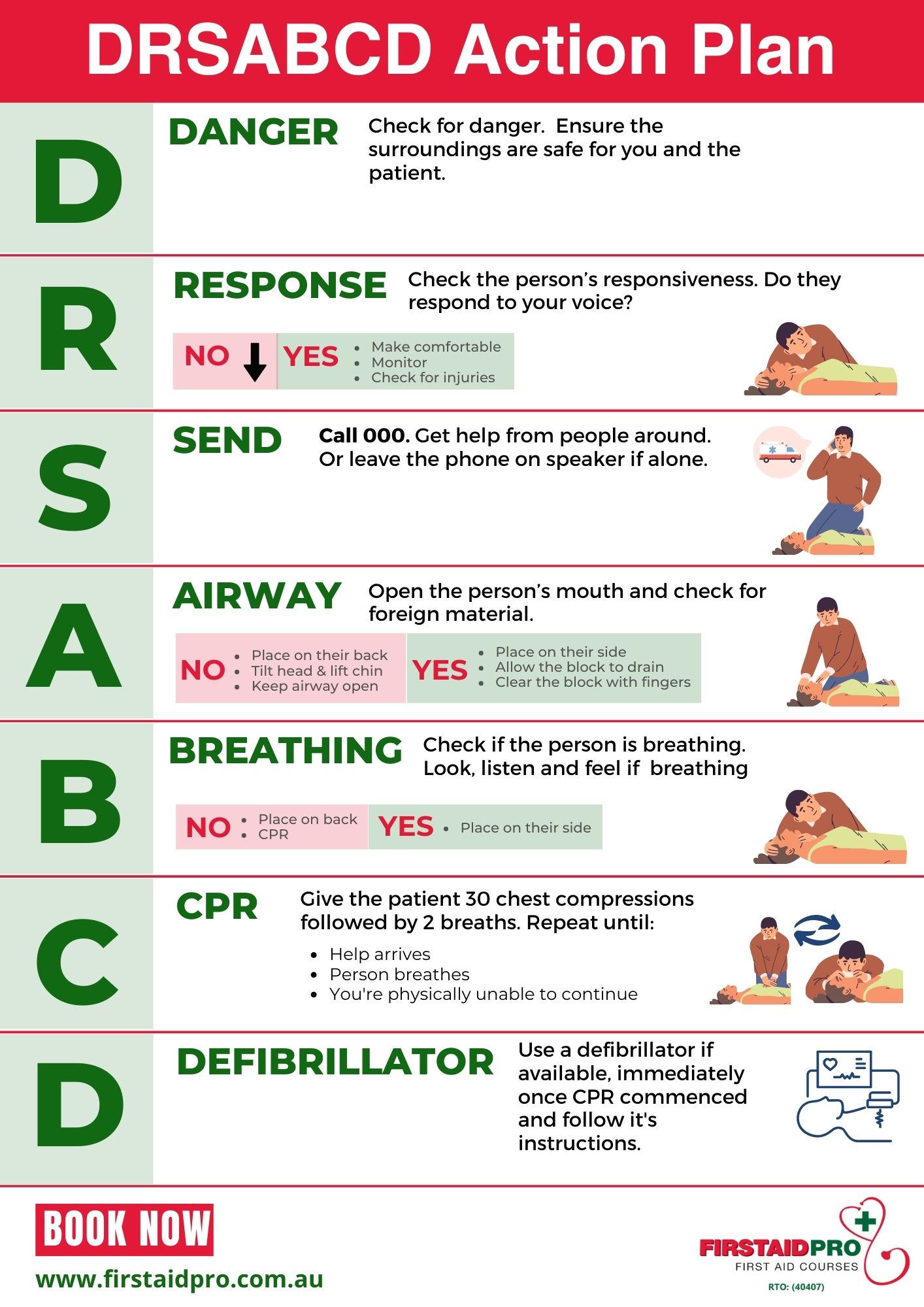
Think of a roadside plan as a short, repeatable script you can run under stress and anxiety: setting, shield, call, care. Placement the automobile for security. Protect the scene with lights and signage. Call emergency services with clear details. Care for casualties using first aid basics: airway, breathing, blood circulation, and handicap checks. In technique this script takes much less than a min to begin, and it keeps you from missing steps when adrenaline narrows your focus.
An excellent first aid course or a combined first aid and CPR course will offer you that manuscript, pressure-tested with circumstances. CPR Course Sippy Downs Newbies take advantage of realistic drills that consist of loud traffic noise, low light, or a substitute fuel scent. Repeating matters. After 3 or 4 runs, the sequence feels natural.
Your automobile's first aid package that actually deals with the roadside
A bloated set can be as worthless as a vacant handwear cover box if you can not locate what you need. I have chosen a compact, clear-pouched package that lives under the front guest seat. It favors items that take care of constant issues or buy time in extreme cases.
- Gloves, eye security, and an easy face mask. Obstacle security keeps the assistant in the game when fluids are present. Large injury dressings and 2 tourniquets. Road injuries hemorrhage, and direct stress plus a tourniquet can be lifesaving when a limb is involved. Triangular plaster and roller bandage. Versatile for slings, splints, and protecting dressings. Trauma shears. Cut clothes rapidly to locate wounds, free seatbelts, and shape dressings. Foil emergency covering. Stopping shock is not only concerning hemorrhaging control. Warmth helps.
This is the very first of just two listings in this write-up. Every little thing above match a little pouch. Add a pocket lantern, a pen, and a couple of adhesive dressings for small cuts. If you frequently drive with children or older grownups, insinuate an added pair of nitrile handwear covers and a 2nd blanket. The extra blanket doubles as shade on warm asphalt when you stoop next to a casualty.
Training issues more than equipment. I have actually seen an untrained onlooker look at a tourniquet as though it could bite, while valuable minutes ticked by. The same person, after a solitary focused session in CPR training and bleeding control, used one smoothly in a later situation. Tools magnifies expertise, it hardly ever replaces it.
First minutes at the scene: just how to establish the stage for safety
The initially thirty seconds can decide whether the event gets better or worse. New motorists should develop a routine pattern that causes without debate.

Approach slowly and think like another chauffeur that can not see what you see. Usage threat lights early. If you have to quit, pull past the case so your cars and truck shields the scene, then angle your wheels far from web traffic in instance you are struck from behind. In the evening, a torch swung low and side to side reviews far better to oncoming drivers than an agitated overhead motion.
When you march, take a breath and run a quick scan for gas smell, smoke, electrical energy lines, and surface hazards like a ditch or loosened gravel. If something feels wrong, withdraw and rearrange. The majority of first aid mistakes occur when helpers rush the start. The repair is a practiced pause.
Once you determine it is secure enough to help, give yourself a working bubble. If you carry a high-visibility vest, put it on. Maintain guests in the secured cars and truck unless they have a job. Assign easy tasks. Someone calls emergency services. Another fetches the first aid set and a covering. Clear work decrease onlooker drift and keep you focused on the casualty.
Calling for assistance that arrives ready
The distinction between an unclear and a crisp contact us to emergency solutions can be five minutes of response time and better allotment of sources. Speak slowly. Begin with the area, consisting of direction of traveling and the nearest pen you can recognize. Mile markers, bridge names, exit numbers, and general practitioner works with from a mobile phone all help. If you are between towns, offer distance and instructions from the last sign you passed.
State the number of vehicles and people entailed, and flag any time-sensitive issues: trapped traveler, significant blood loss, unresponsive individual, fire danger. If you have started CPR, claim so. That line alone can accelerate the dispatch of the closest unit with defibrillation ability. A first aid pro finds out to think in those terms since it helps the system aid you.
Keep the line open till the operator releases you. If your phone battery is reduced, state it, and ask if one more spectator can keep the telephone call to life. Do not hang up to movie. Evidence seldom surpasses care in the initial minutes.
Triage at the roadside: that requires you first
When greater than one person is hurt, prioritization comes to be awkward but necessary. The guideline that I instruct new drivers is basic: breathing and bleeding first, after that brains and bones. If somebody is less competent and not breathing usually, start CPR. If somebody is spouting or pooling blood, apply direct pressure high and hard, then use a tourniquet if stress is insufficient. If a person is breathing however unresponsive and you see no extreme bleeding, open the respiratory tract, look for normal breathing, and place them in the healing placement if safe.
This sequence is not inflexible. You adjust based on what the scene offers you. For example, if you believe a back injury but needs to choose in between stringent spinal placement and getting rid of the airway, you select the air passage. Hypoxia kills faster than the majority of spine concerns. That judgment telephone call becomes less complicated when you have exercised it in a first aid and CPR course where instructors press you through unpleasant circumstances and debrief decisions afterward.
CPR on hard ground, with website traffic nearby
CPR on the roadside has two major obstacles, surface and diversion. Compressions work best on a company surface. If the person is in a car seat and less competent without typical breathing, you need to obtain them onto the ground if you can do it securely. Glide the seat back, recline it, and with assistance, overview the individual out while supporting the head and neck as best you can. Do not lose time trying to make it excellent if mins are passing without compressions.
Once on the ground, kneel where you have security. Traffic wind can buffet your balance. Area the heel of your hand in the center of the chest, other hand on top, shoulders over your hands, and press hard and fast. The acquainted target of 100 to 120 compressions per minute still holds, roughly the beat of numerous tracks. Deepness issues greater than precision to the closest millimeter. Aim for a 3rd of the upper body depth in an adult.
If you have educated with a CPR course lately, you will certainly remember the rhythm and body mechanics. If you have not, do not let excellence quit you. Press, permit full recoil, minimize stops briefly, and switch compressors every two minutes if another educated person exists. If a public gain access to defibrillator neighbors, send a person to fetch it. Several service stations and recreation center along significant roadways now bring AEDs. They are created to speak you with the process. Reveal the chest, stick the pads as revealed, adhere to the prompts.
A short anecdote sticks with me. A P-plater drew right into a suburban kerb on a wintertime afternoon when a jogger fell down in advance of him. He had actually completed a CPR correspondence course 3 months previously. He started compressions within a min, asked a neighbor for an AED, and continued till paramedics arrived. The jogger made it through. The paramedic later on told him that by the time they supplied the first shock, they were improving circulation that somebody else had actually already begun. That is the power of practice.
Bleeding control that gets time
Road accidents generate lacerations and arm or leg injuries where bleeding runs quick. Your first relocation is still direct stress. Plant your gloved hand with a wad of dressing or folded fabric straight over the source and press hard. If the clothing soaks via, include more on the top. Do not peel the first layer off; you risk breaking early clots.
If blood loss remains heavy from an arm or leg, apply a tourniquet a couple of inches above the injury, not over a joint, and tighten up up until hemorrhaging quits. It will harm. Describe that pain implies it is working. Mark the time if you can. Stay clear of improvisated string tourniquets. They can hurt cells without stopping the hemorrhage. Modern windlass tourniquets are small and economical. Two live under my traveler seat because I have seen exactly how commonly one is not enough when injuries are high on the thigh.
In a first aid training setting, instructors typically show the difference great method makes. A tourniquet used strongly adequate to stop a pedal pulse in a controlled drill stops recurring blood loss in the real world. The most usual error is to quit tightening up when the person complains. Remain calmness, maintain transforming up until hemorrhaging stops.
Airway, breathing, and the recovery position
Many roadside casualties are semi-conscious and breathing however gurgling or snoring. That noise recommends a partly blocked air passage. A gentle head tilt and chin lift can open up the airway. If you presume back injury, utilize a jaw drive if you know exactly how. If vomit or blood pools in the mouth, roll the individual onto their side in the recovery position. This safeguards the air passage far better than any ambition risks from the roll itself.
The healing placement is straightforward and robust. Move the arm closest to you out at an ideal angle, bring the far knee up, put the much hand across the breast with the rear of the hand against the cheek, then draw the knee towards you while safeguarding the head. Once they get on their side, readjust the head tilt to keep the respiratory tract open and inspect breathing. Cover them with the aluminum foil covering to preserve warmth, especially on cold asphalt that can sap warmth ten times faster than air.
Spinal worries in the actual world
Drivers find out to fear spine injuries, and rightly so. What they typically miss out on is the trade-off between ideal immobilization and genuine constraints. If a conscious person continues to be seated in a stable automobile, complains of neck pain, and can preserve their very own respiratory tract, support their head in a neutral placement and motivate tranquility. Do not haul them out unless there is instant danger, such as fire or increasing water. A first aid and CPR course will teach you easy hands-on in-line stablizing: hands on either side of the head, gentle steady assistance, no traction.
If you have to relocate someone due to the fact that the car is hazardous, connect plainly, recruit helpers, and utilize a regulated help as opposed to a panicked tug. The objective is to relocate the individual in one line. Much better a somewhat incomplete action with 3 helpers who know the plan than a solo pull that turns the neck. New chauffeurs that practice a couple of safe-exit drills in training lose the worry that brings about harsh improvisation.

When the client is a youngster, an older grownup, or a pet
Edge instances complicate the roadside. Youngsters and older adults are more at risk to temperature extremes and shock. A child's respiratory tract swells promptly. If a kid is conscious and breathing after a crash, prioritize heat and gentle reassurance while you keep an eye on breathing. For CPR, the compression depth and strategy modification with age and size, however the concept is the same: press hard sufficient to relocate blood, at a steady pace, and do not delay.
Older adults might under-report discomfort, specifically after low-speed crashes that still damage ribs or hips. Enjoy their breathing, look for upper body inflammation, and treat for shock also if their skin feels warm. A silent older guest might be wandering into damage while everyone fusses over the chauffeur's visible cuts.
Pets develop hazards of their own. Even friendly pet dogs can bite when scared. If a pet is in the car, ask the proprietor to restrain it. If that is not possible, create space. Your safety and security comes first.
Heat, chilly, and the lengthy wait
Urban accidents often settle swiftly. Country or coastal roads can extend waiting times past half an hour. Environmental control enters into first aid. On warm days, shade the casualty with a jacket or a sunshade removed from your windshield. Deal sips of water only if the individual is fully sharp and unimpaired in the abdominal area, and never ever if you suspect they may most likely to surgical procedure quickly. On cold nights, insulation from the ground matters as high as a covering on top. Slide a flooring mat or folded up layer under the individual. Shuddering is an indication the body is trying to maintain; if it quits and the person comes to be passive, hypothermia is advancing.
If you remain longer than 10 minutes, construct a rhythm. Reflect on the airway and breathing every couple of minutes. Examine bleeding under dressings. Update emergency solutions if the scenario changes. Turn helpers if a person reveals indications of shock or emotional overload. Calm management avoids errors as much as clinical skill.
What official training offers brand-new vehicle drivers that videos do not
You can find out the names of methods on a display. You construct judgment in a room with a teacher that views your hands and corrects your timing. A great first aid and CPR course consists of:
- Hands-on CPR training with comments on deepness and rate, consisting of grown-up and kid variations. Bleeding control with real tourniquets and stress methods, not just theory. Scenario drills that replicate roadside dangers, sound, and restricted light. Communication practice, from emergency phones call to routing bystanders. Assessment and recuperation setting work with partners of different sizes.
This is the second and final checklist in this short CPR Near Me Marion article. If spending plan or time is limited, search for short-format CPR courses or a CPR correspondence course that matches a night. Several suppliers issue a first aid certificate after an integrated first aid and CPR course that runs eventually, occasionally with on-line pre-learning. Teachers who have worked with ambulances or in emergency divisions can layer in field truths you do not receive from a slide deck.
I have had students tell me they only joined because their employer needed it, then later on confess that the roadside scenarios were the most important component. Practice resets your nerve system. The first time you put pads from an AED or crank a windlass tight enough to quit a simulated hemorrhage, you verify to yourself that your hands will work under pressure.
The lawful and honest frame
Many jurisdictions have Good Samaritan protections for onlookers who act in great faith within their degree of training. That phrase issues. If you have first aid training, provide the treatment you have actually been taught, do not claim to be more than you are, and hand over to experts quickly. Obtain authorization when the person is aware and capable. If they decline care yet stay in jeopardy, keep a secure existence and call for assistance. For a less competent individual, consent is implied.
Avoid social media. Recording breaches personal privacy and can distract you from care. Keep notes rather if you must remember times and searchings for. The handover to paramedics boosts when you can claim, I applied a tourniquet at 4:22 pm, or She was breathing 16 times a min 10 minutes earlier and now it is 10.
Mistakes I see most often, and how to prevent them
Three patterns recur. First, bad positioning of the automobile creates an additional hazard. Repair it with that early time out and a behavior of drawing previous and shielding. Second, assistants stoop down and never look up once again. Repair it by appointing a search that warns of approaching traffic drifting towards the scene. Third, individuals undervalue shock. A casualty who jokes and insists they are fine can be an hour far from collapse if they have interior blood Online CPR Training loss. Fix it by enjoying skin color, temperature, and psychological clarity, and by keeping them warm and still.
Another subtle error is speaking excessive and doing too little. Language can calm, yet hands stop bleeding and open air passages. If you notice yourself providing long explanations, reduce them to orient, constant statements coupled with action. I am mosting likely to tilt your head to assist you take a breath. You will really feel stress on your leg. I need you to remain with me and check out that tree.
After the sirens: caring for yourself
New motorists often replay their very first roadside emergency situation on a loophole for days. That is typical. The body comes down from adrenaline in waves. Eat, hydrate, and sleep if you can. Document what you did and what you might alter following time. If invasive photos continue or you feel numb or jumpy for more than a week, speak with a person, ideally a therapist accustomed to vital cases. Great first aid training also covers mental first aid and the helper's well-being for exactly this reason.
If you used supplies, replenish the set within a day. If you saw something missing, include it while the memory is fresh. Take into consideration booking a refresher course. Abilities fade within months without method. Short CPR courses or blended first aid courses that include online modules complied with by a practical session help keep the hands honest.
The peaceful confidence that transforms the road
A new driver with a little kit and a first aid certificate does not look any kind of different from various other motorists in website traffic. The difference emerges in those rare minutes that define just how an event unfolds. They position the cars and truck with intent. They speak clearly to emergency solutions. They put on handwear covers without messing up. Their hands land in the appropriate put on a breast bone, or they tighten a tourniquet without apology. They observe the onlooker standing as well near to the lane and move them back two paces.
Skills compound. One CPR training session reduces reluctance. A first aid and CPR course that consists of blood loss control and scene monitoring turns you from a spectator right into a capable initial responder until the professionals show up. For brand-new motorists that wish to carry their share of security on the road, that is the best upgrade you can contribute to your license.